Lab 02: Projection Error Measurement with QGIS (Ready!!)
Note: To make sure you are viewing the most recent version of this lab guide, hold Shift and click the browser refresh button.
Turn-in for grading: This lab includes material that must be turned in for grading. Complete the required deliverables and submit them as instructed by the course.
Introduction
This lab turns projection and measurement ideas into something measurable. You will calculate county area in two ways:
- As a geodetic measurement on the ellipsoid.
- As a planar measurement after the data are projected into a State Plane coordinate system.
You will then calculate the percent difference between those two results and symbolize the error. The final map makes projection distortion visible instead of leaving it as an abstract idea.
Suggested reading: Bolstad, Chapters 3, 4, and 7.
Data
This exercise uses two datasets downloaded from Stanford EarthWorks:
- County boundaries for the United States as polygons.
- A 10-degree graticule as lines.
You will download one dataset as a shapefile and the other as GeoJSON so you can also review how QGIS handles different vector formats.
- Create a project folder on your computer, something like
Week01Labs, where you will keep both the data and the QGIS project file. Download the following datasets into that folder:
Download the Zipped Object for 1:1,000,000-Scale County Boundaries of the United States, 2014 from https://earthworks.stanford.edu/catalog/stanford-wg010mf7692.
- Download the GeoJSON for 10-Degree Graticule Grid, World, 1:10 million, 2012 from https://raw.githubusercontent.com/mapninja/Earthsys144/master/data/stanford-fr122tq8910-geojson.json. (EarthWorks is currently unable to generate GeoJSON derivatives, so use this course data copy instead.)
Note: The GeoJSON file may open in your browser instead of downloading. If this happens, go to File > Save (or ⌘+S on Mac) to save the file to your computer.
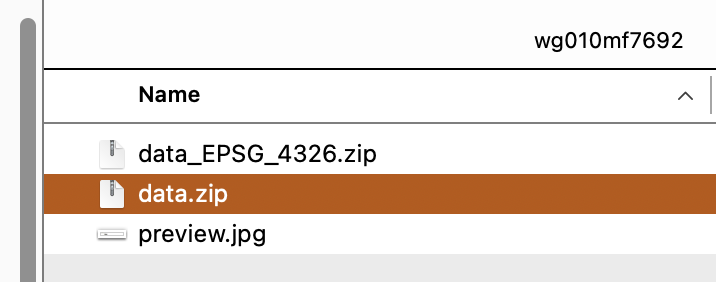
- Unzip the county boundary download if needed. Inside the first unzip, you will find additional zip files. Use the
data.zippackage, which preserves the archival data in its original CRS.
Create a New Project
Before you add data, create and save a new QGIS project.
A note on project organization
A QGIS project file does not contain the datasets you add to it. It stores paths to those datasets, so portability depends on keeping the project file and its data together in a well-organized folder structure.
- Open QGIS.
- Click the New Project button
 .
. - Click the Save button
 .
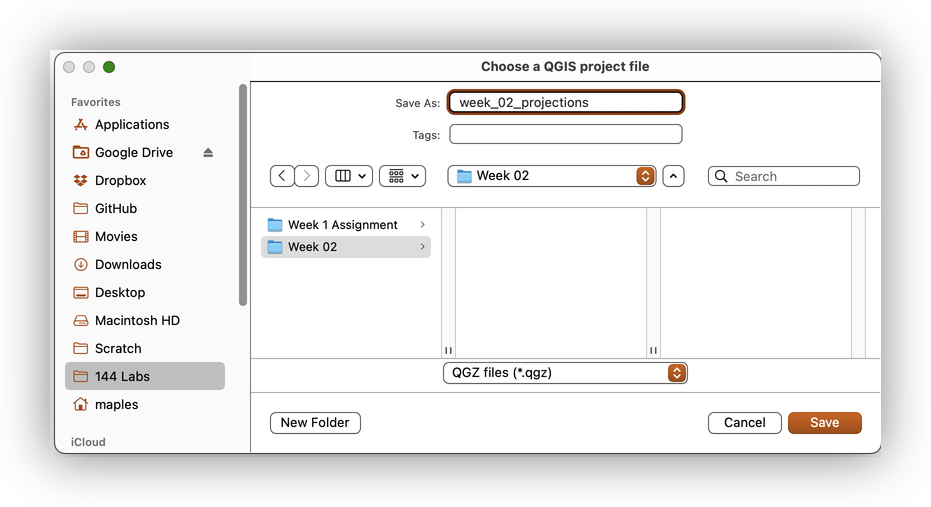
. - Save the project in your project folder with a name such as
week_01_projections.qgz.
Add the Data
You will add the data using two common QGIS workflows.
Drag-and-Drop Method
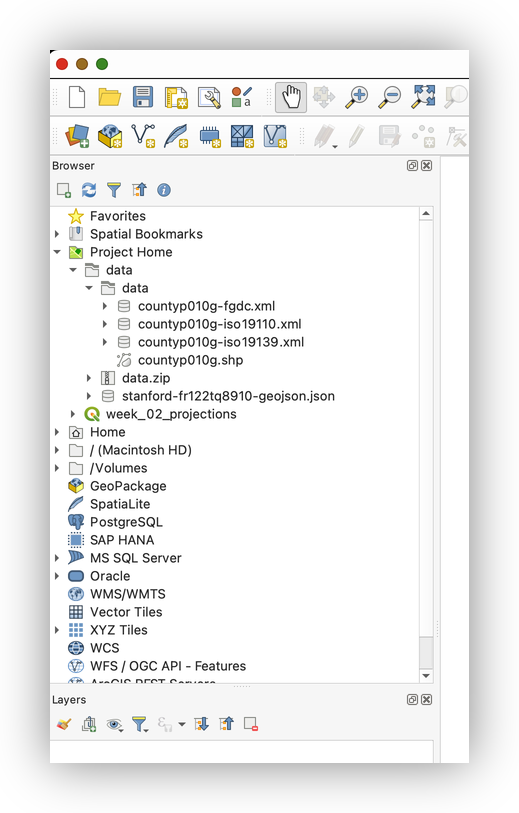
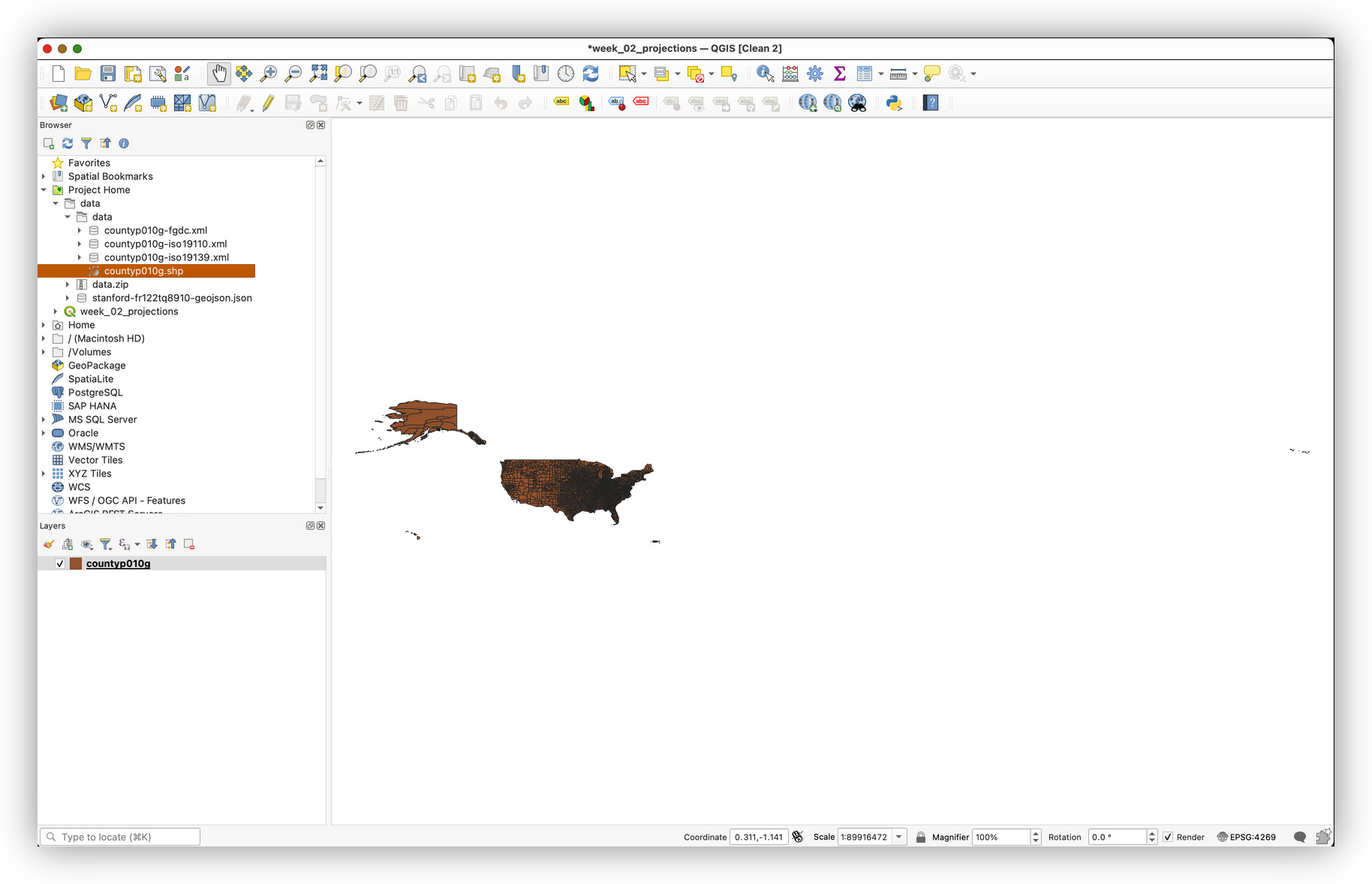
- In the Browser panel, browse to your project folder and expand the location that contains the county shapefile.
- Drag
countyp010g.shpinto the map canvas.
- Save the project.
Data Source Manager Method
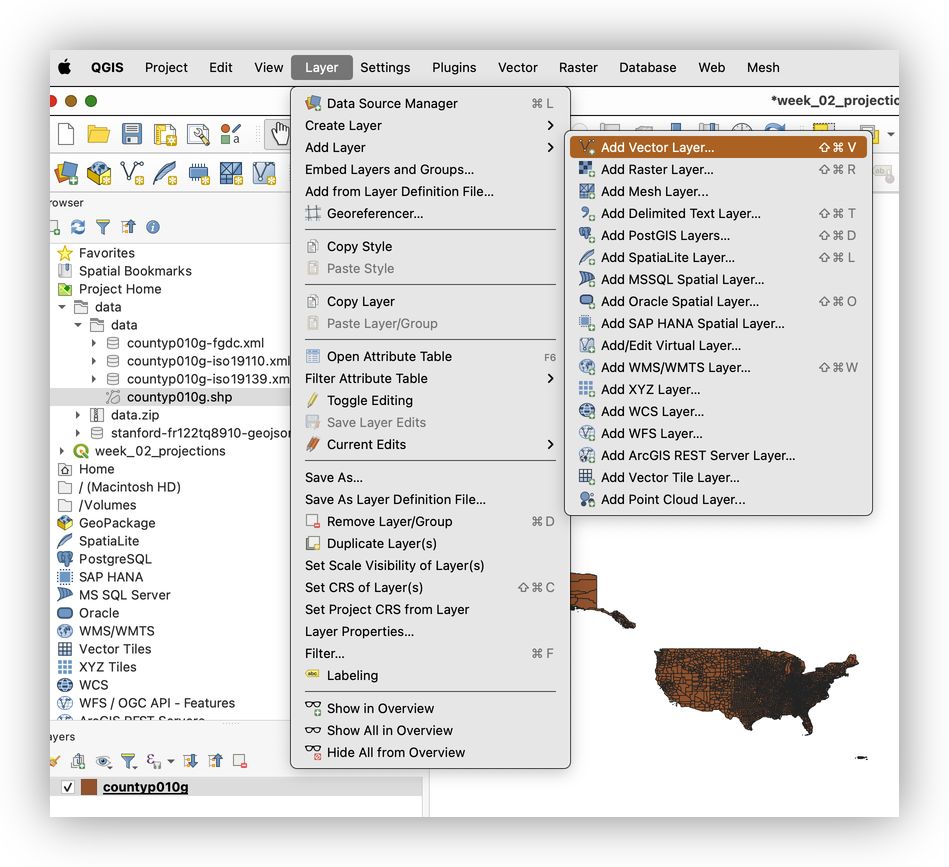
- Click the browse button
 and navigate to the downloaded graticule GeoJSON.
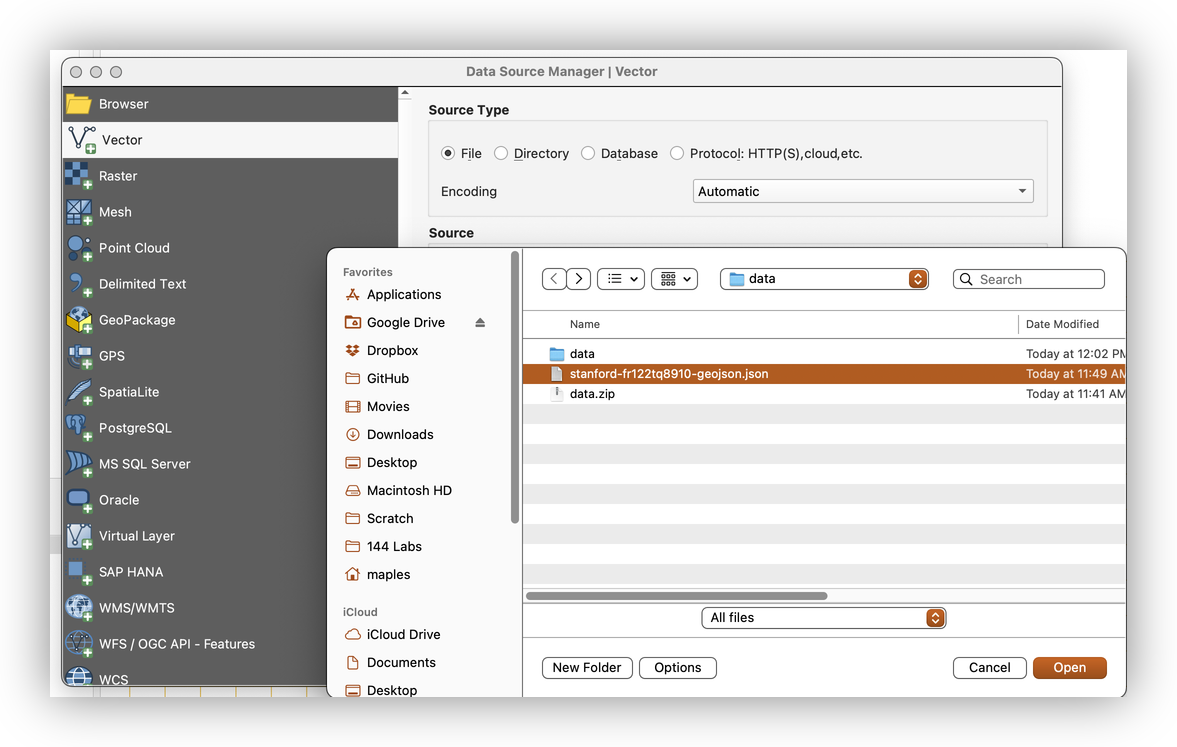
- Select the GeoJSON file and click Open, then Add.
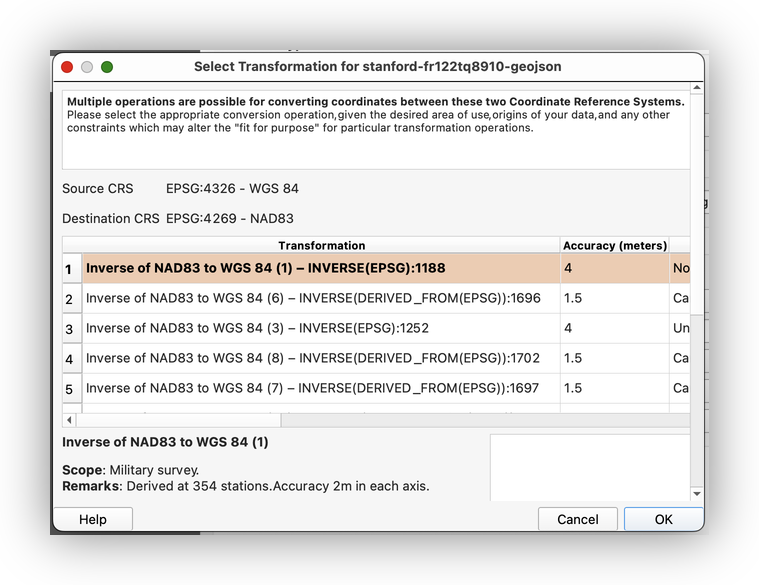
- QGIS will prompt you to choose a transformation because the layers are in different geographic coordinate systems.
Accept the default transformation from EPSG:4326 - WGS 84 to EPSG:4269 - NAD83. QGIS will reproject the layer on the fly so both layers display together in the current project CRS.
- Click OK, then close the Data Source Manager.
- Save the project.
Explore the Data
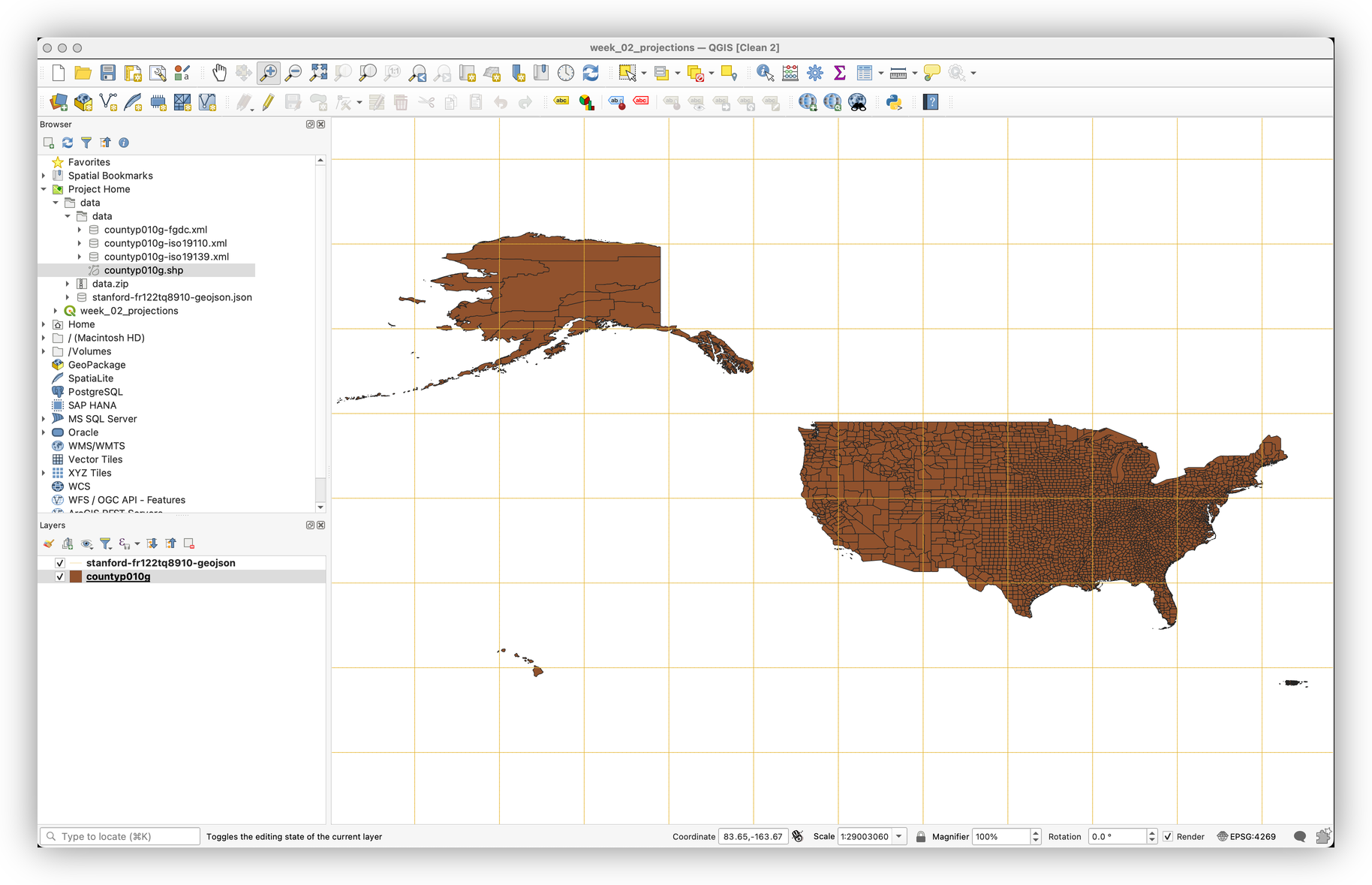
- Use the zoom tool
 to draw a box around Alaska and the continental United States.
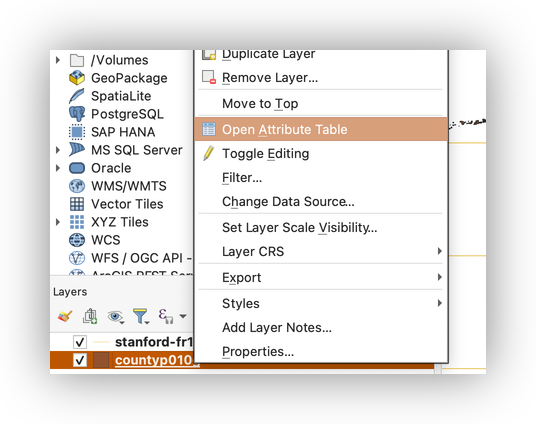
Open the Attribute Table
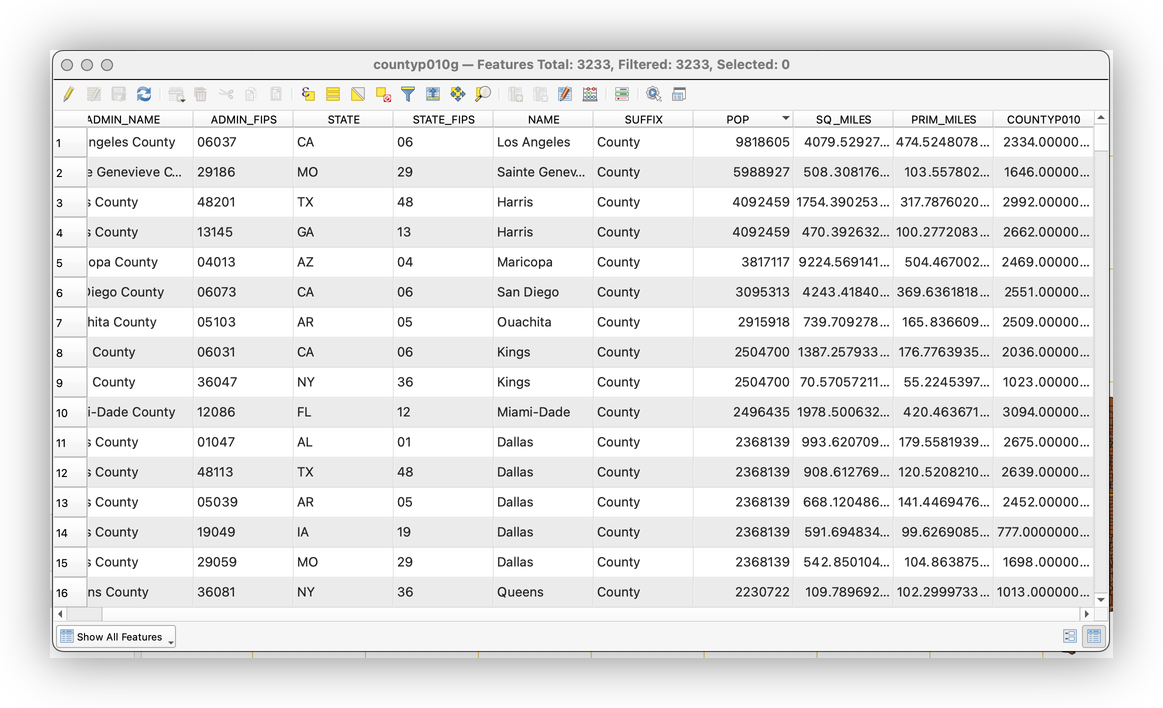
Notice that each county polygon has one row of attributes. The fields include properties such as county name, state, population, and area.
Symbolize the Data
You will style the graticule with a single symbol and symbolize the counties with a calculated population-density value.
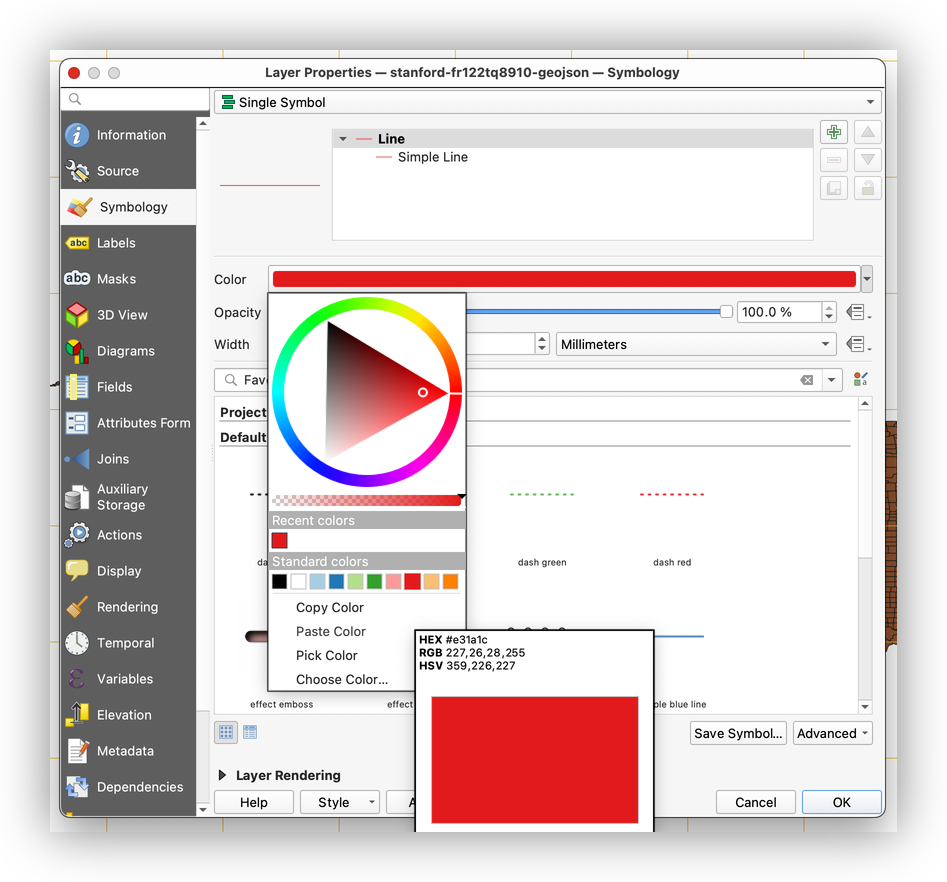
Style the Graticule with a Single Symbol
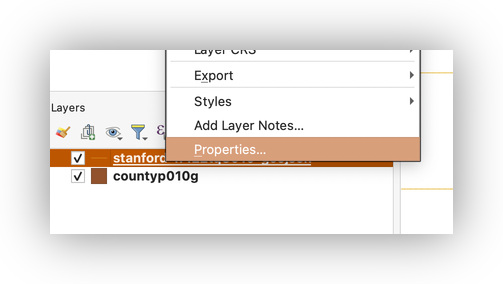
- Open the Symbology tab.
- Change the line color to something distinct.
- Set the line width to
0.4millimeters. - Click OK.
Style the Counties with a Calculated Quantity
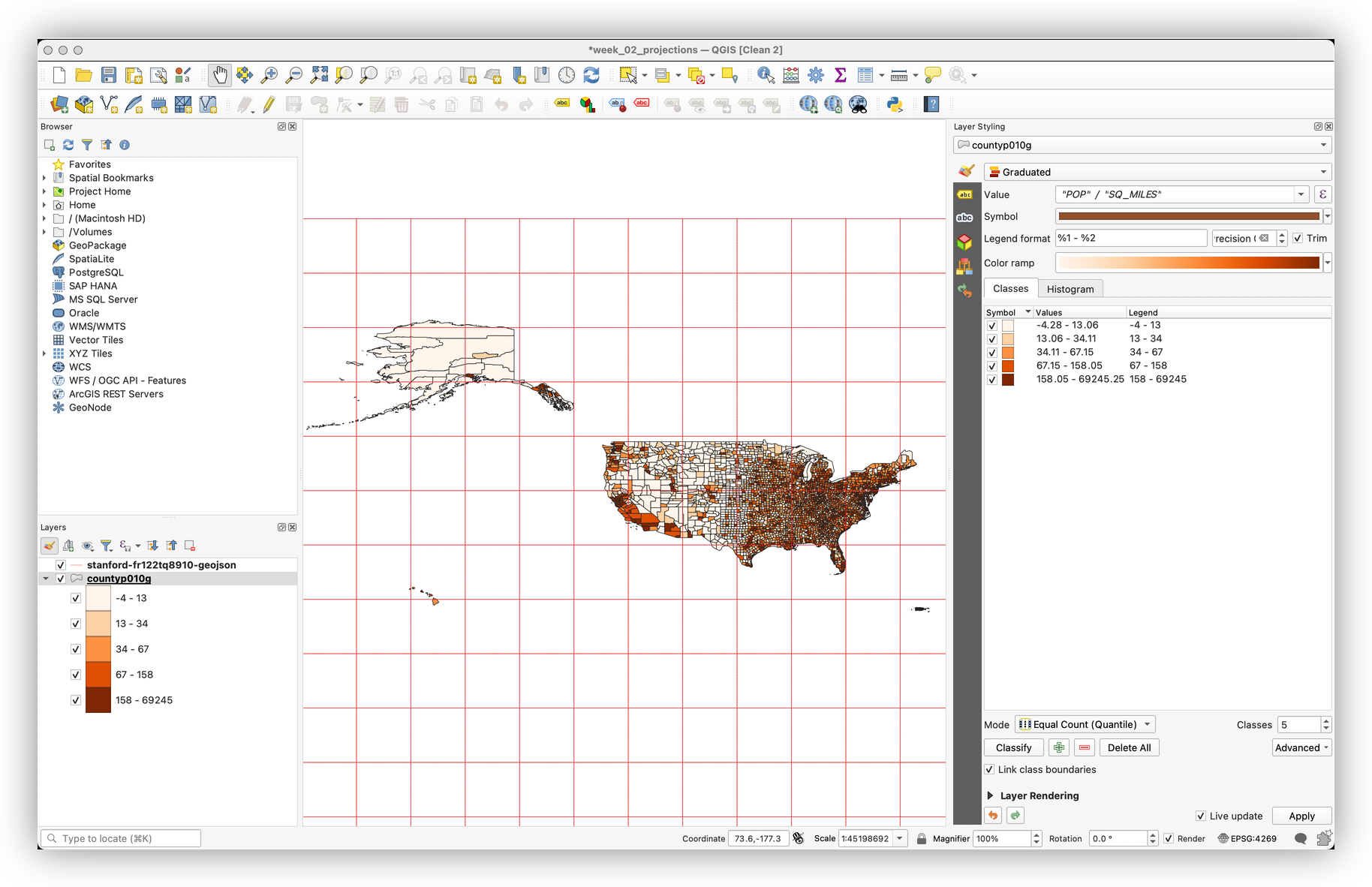
- Turn on the Layer Styling panel from View > Panels > Layer Styling.
- Select the
countyp010glayer. - Change the symbology method from Single Symbol to Graduated using the dropdown
 .
. - Click the expression button
 next to the Value field.
 - Build the expression:
"POP" / "SQ_MILES"
Use the division operator button  if helpful.
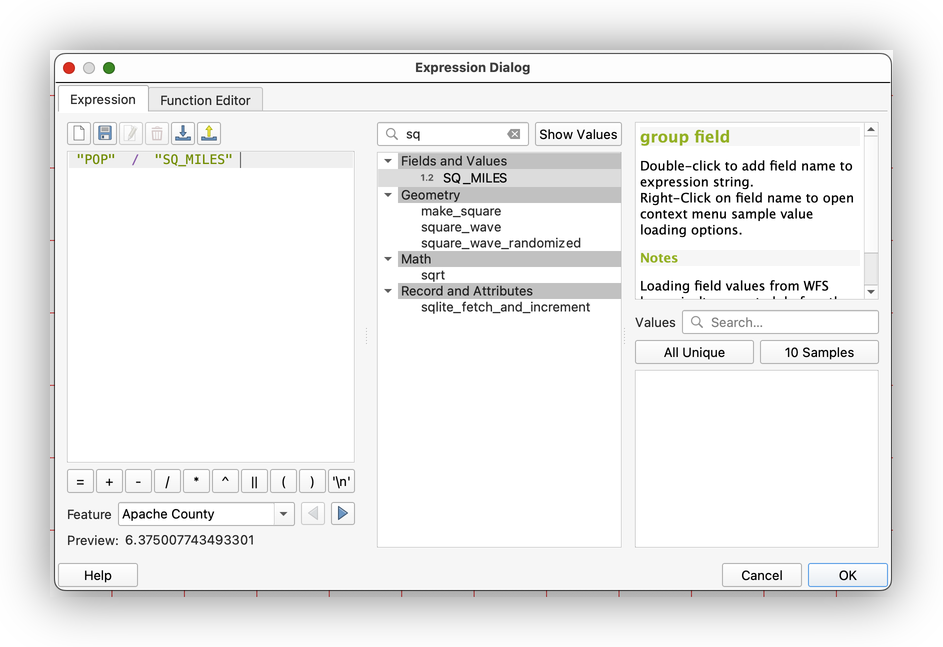
- Click OK.
- Set Mode to Equal Count (Quantile).
- Set Classes to
5. - Click Classify.
- Choose a color ramp if desired.
- Save the project.
CRS, Measurement, and Why This Matters
The county boundaries are stored in a geographic CRS, so their coordinates are angular rather than planar. QGIS can still compute area, but the method matters:
- If you use ellipsoidal measurement, QGIS measures on the earth model you specify.
- If you use planar measurement, QGIS measures on the flat projected plane defined by the layer CRS.
The whole point of this lab is to compare those two outcomes and then map the difference.
Set the Ellipsoid and Measurement Units
- Go to Project > Properties.
- Open the General tab.
- In the Measurements section, set the ellipsoid to WGS 84 (EPSG:7030).
- Set distance units to Meters.
- Set area units to Square Meters.
- Click OK.
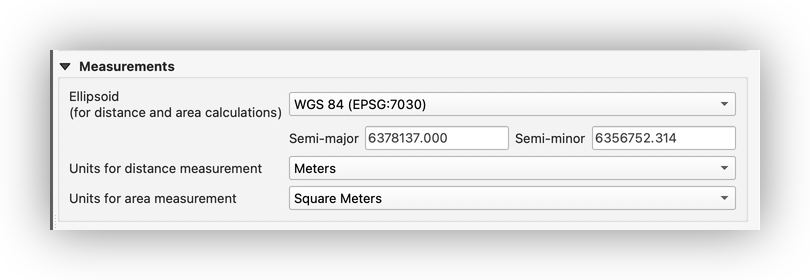
From this point forward, ellipsoidal measurements in the project will use WGS 84.
Examine the Project CRS
- Look at the CRS indicator in the lower-right corner of the QGIS window
 .
. - Notice that the project CRS is
EPSG:4269(NAD83).
Because the county shapefile was the first layer added, QGIS used that layer's CRS as the initial project CRS.
Examine Layer CRS Values
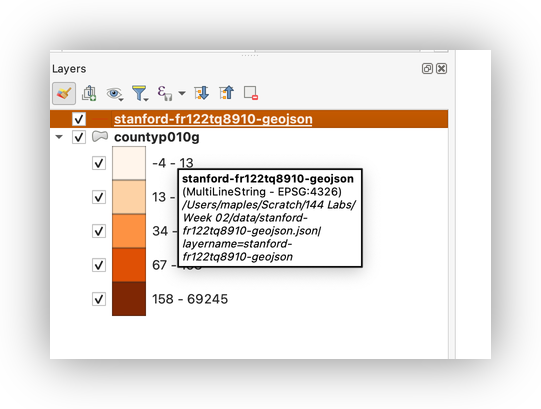
Hover over a layer name in the Layers panel to see:
- The filename.
- The layer CRS.
- The source path.
For the graticule layer, you should see EPSG:4326.
Set the Project CRS from a Layer
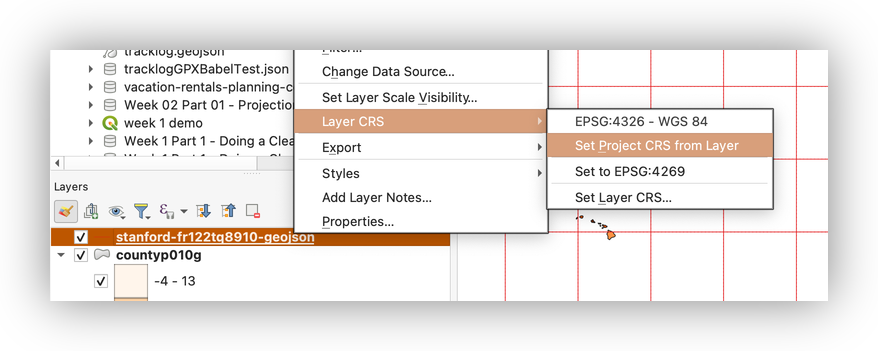
- Confirm that the project CRS indicator now shows
EPSG:4326.
This should not dramatically change the map display because WGS 84 and NAD83 are very similar for this purpose.
Change the Project CRS to a Projected System
Now switch to a projected CRS so you can compare planar measurement against ellipsoidal measurement.
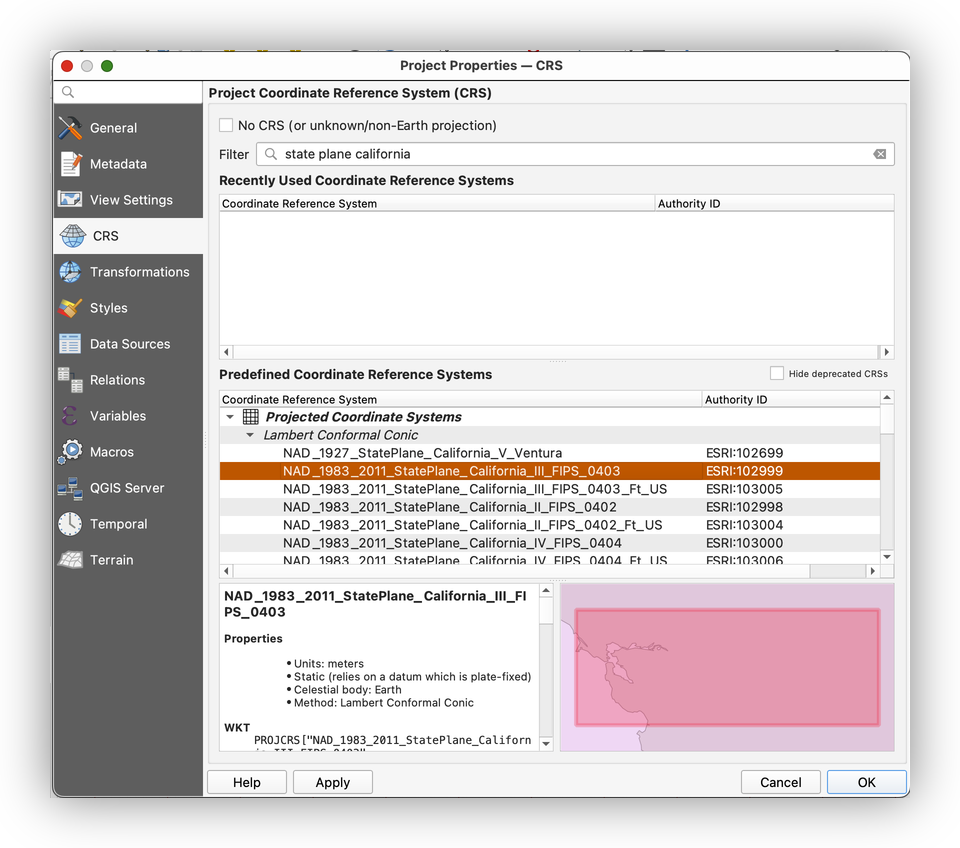
- Go to Project > Properties.
- Open the CRS tab.
- Search for
StatePlane_California. - Review the results and note that some versions are in feet and some are in meters.
- Select
NAD_1983_2011_StatePlane_California_III_FIPS_0403 ESRI:102999. - Click OK.
- Save the project.
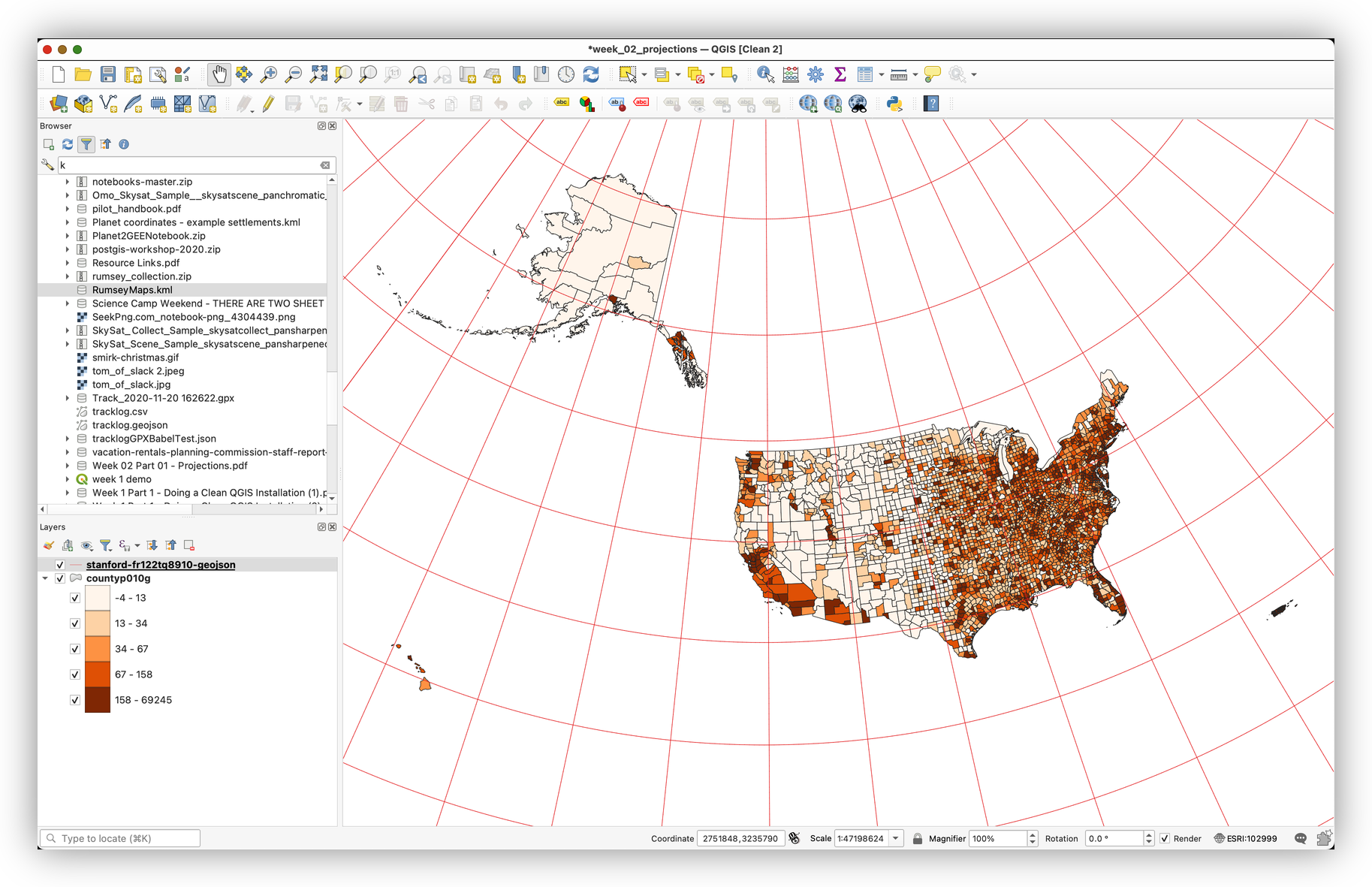
For Reflection
You do not need to turn these in, but think about them as you proceed:
- What happened to the shape of the map canvas display?
- What projection family are you using now?
- Where do you think this CRS is optimized, and why?
Calculate Area on the Ellipsoid
The first area calculation uses the project ellipsoid and geodetic measurement.
Calculate ORIG_SQKM
- Open the attribute table for
countyp010g. - Click the Field Calculator button
 .
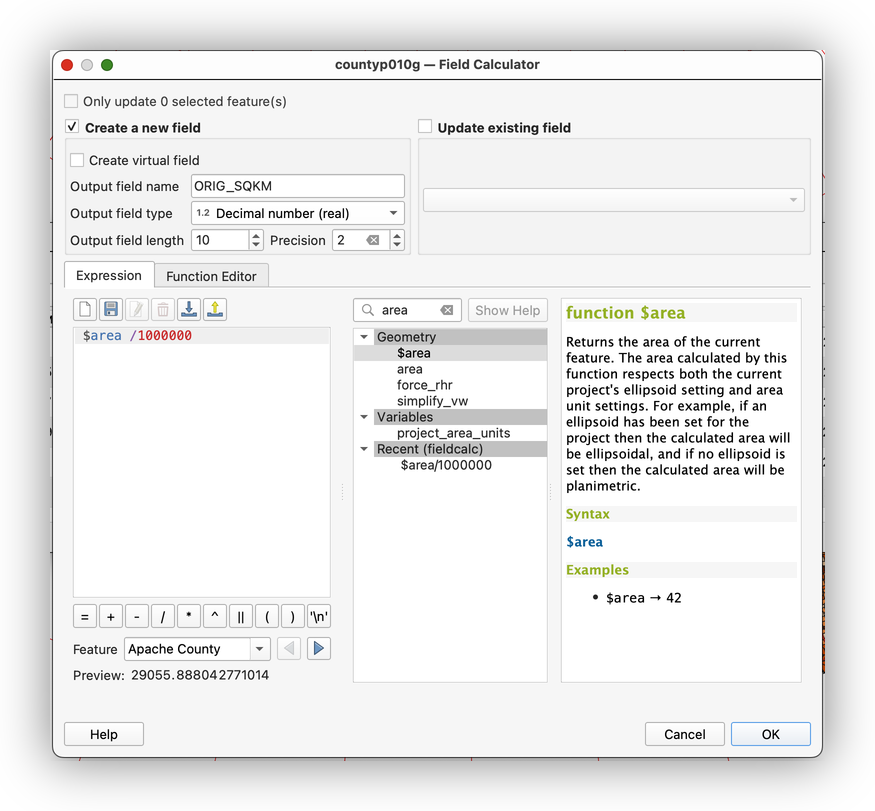
. - Search for
areaand double-click$areaunder the geometry functions. - Build this expression:
$area / 1000000
Use these options:
Create New Field: checked
- Output Field Name:
ORIG_SQKM - Output Field Type:
Decimal number (real) Precision:
2Click OK.
- Click the Toggle Editing button
 to end the edit session.
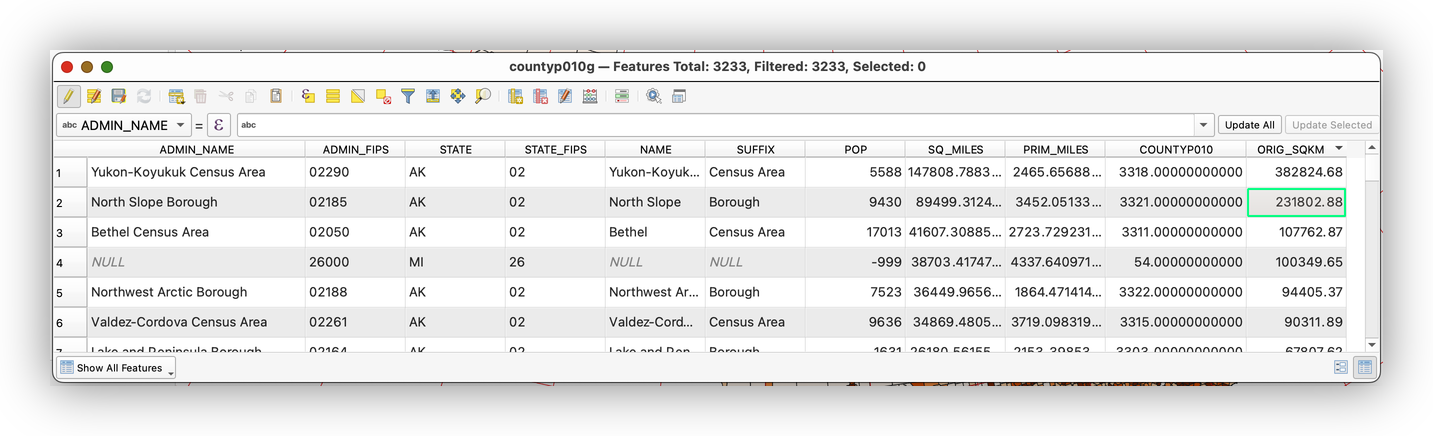
 - Sort the new
ORIG_SQKMfield and confirm the values look reasonable.
This field stores ellipsoidal area in square kilometers.
Reproject the Layer and Calculate Planar Area
Next, you will export a reprojected copy of the counties layer into the current projected CRS and measure area on the plane.
Export a Reprojected Copy
- Right-click
countyp010gand choose Export > Save Features As...
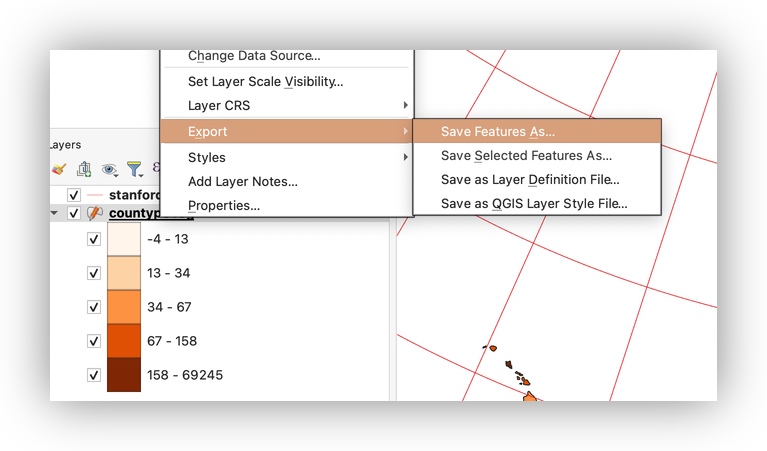
- Click the browse button
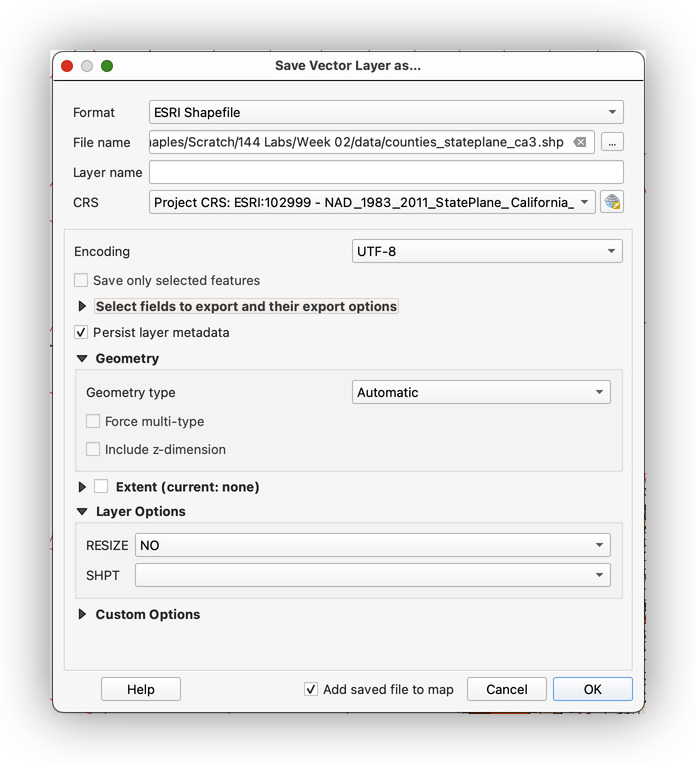
 and save the file to your project folder.
 Use these settings:
Format:
ESRI ShapefileCRS:
Project CRS: ESRI:102999 - NAD_1983_2011_StatePlane_California_III_FIPS_0403Click OK.
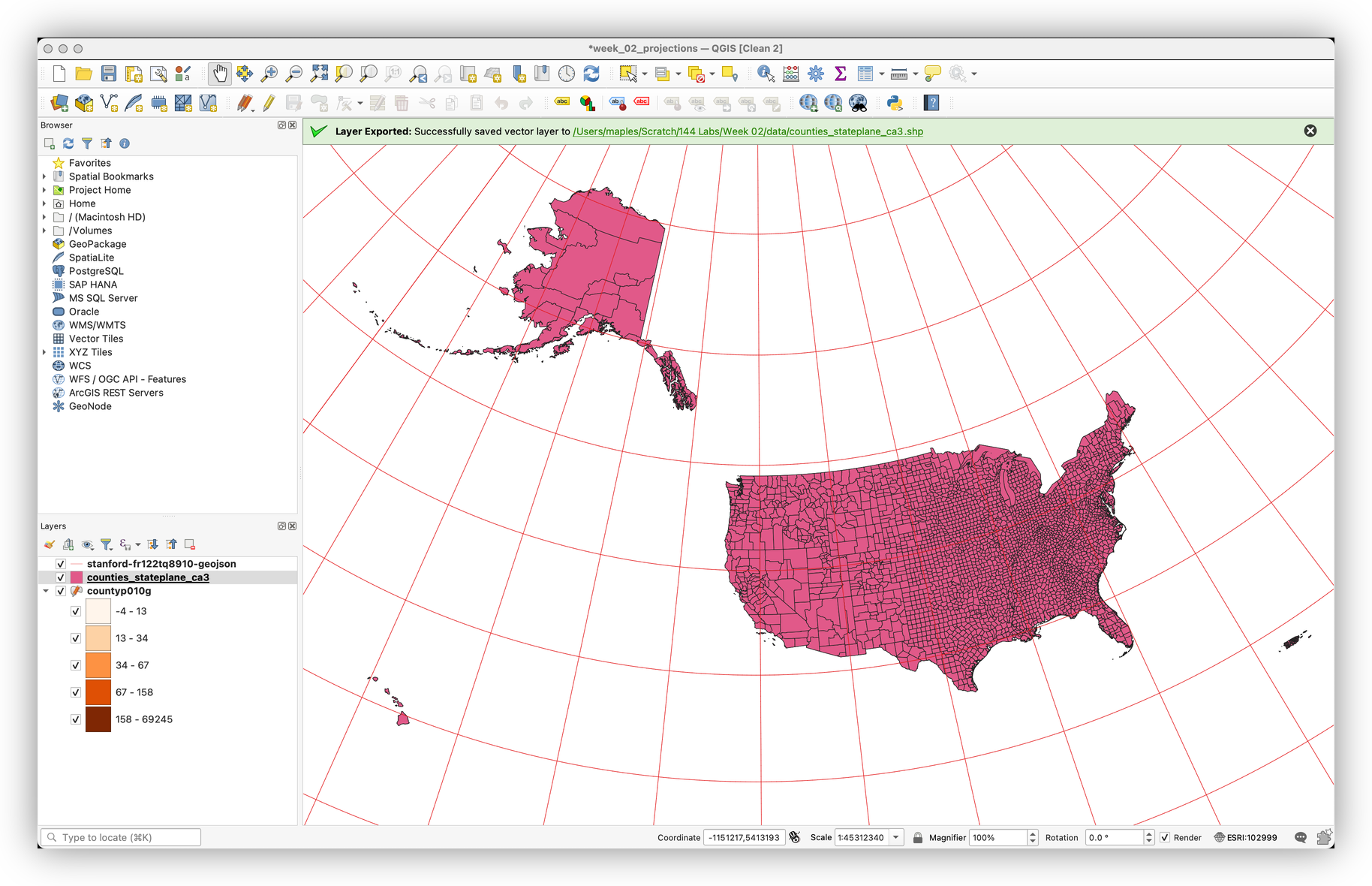
In some QGIS installations, the exported layer may report as EPSG:6419 instead of ESRI:102999. For this lab, treat those as functionally equivalent representations of the same State Plane California III system in meters.
Calculate PROJ_SQKM
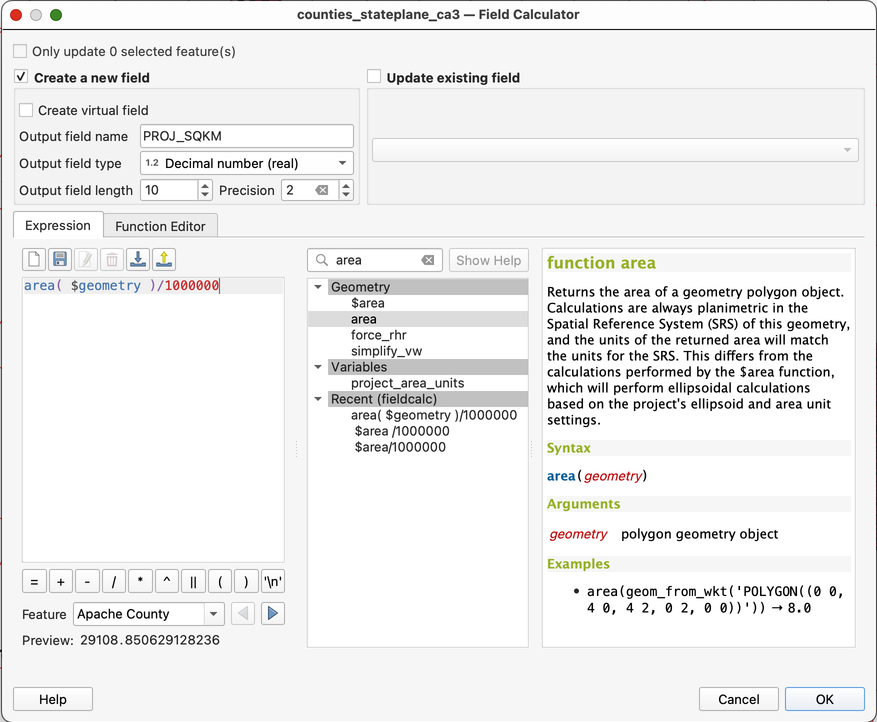
Open the attribute table for the reprojected counties layer and repeat the area workflow, but use the planar area() function:
area( $geometry ) / 1000000
Use these options:
- Create New Field: checked
- Output Field Name:
PROJ_SQKM - Output Field Type:
Decimal number (real) - Precision:
2
When you compare ORIG_SQKM and PROJ_SQKM, the values will be close, but not identical.
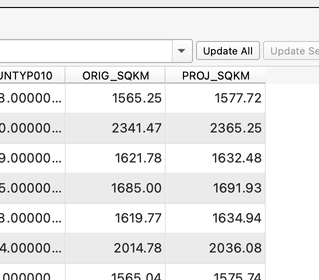
That difference is the lab's main point: even a well-designed projected CRS introduces measurable distortion once you move away from its ideal region and lines of true scale.
Calculate the Percent Error Introduced by Projection
Now calculate the percent difference between the ellipsoidal and planar results.
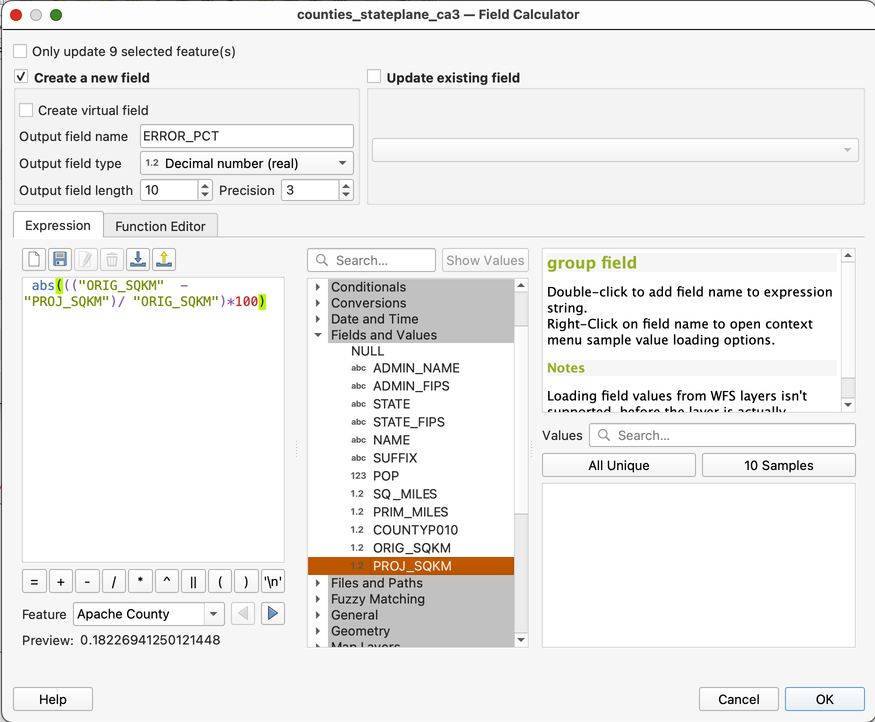
Calculate ERROR_PCT
- Open the attribute table for the reprojected counties layer.
- Open the Field Calculator.
Create a new field with these settings:
Output Field Name:
ERROR_PCT- Output Field Type:
Decimal number (real) - Precision:
3 - Expression:
abs((("ORIG_SQKM" - "PROJ_SQKM") / "ORIG_SQKM") * 100)
- Click OK.
- Turn off editing and save.
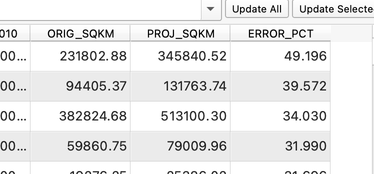
- Sort
ERROR_PCTin descending order and inspect the largest values.
Symbolize the Error Surface
Now map the distribution of measurement error.
- Open the Layer Styling panel for the reprojected counties layer.
Use these settings:
Method:
Graduated- Value:
ERROR_PCT - Mode:
Equal Count (Quantile) Classes:
50Click Classify.
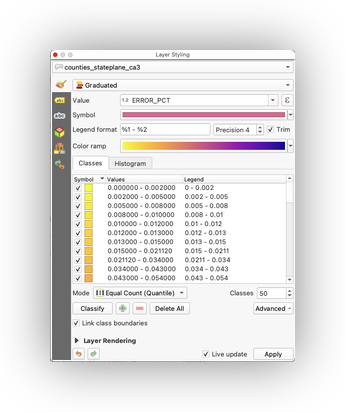
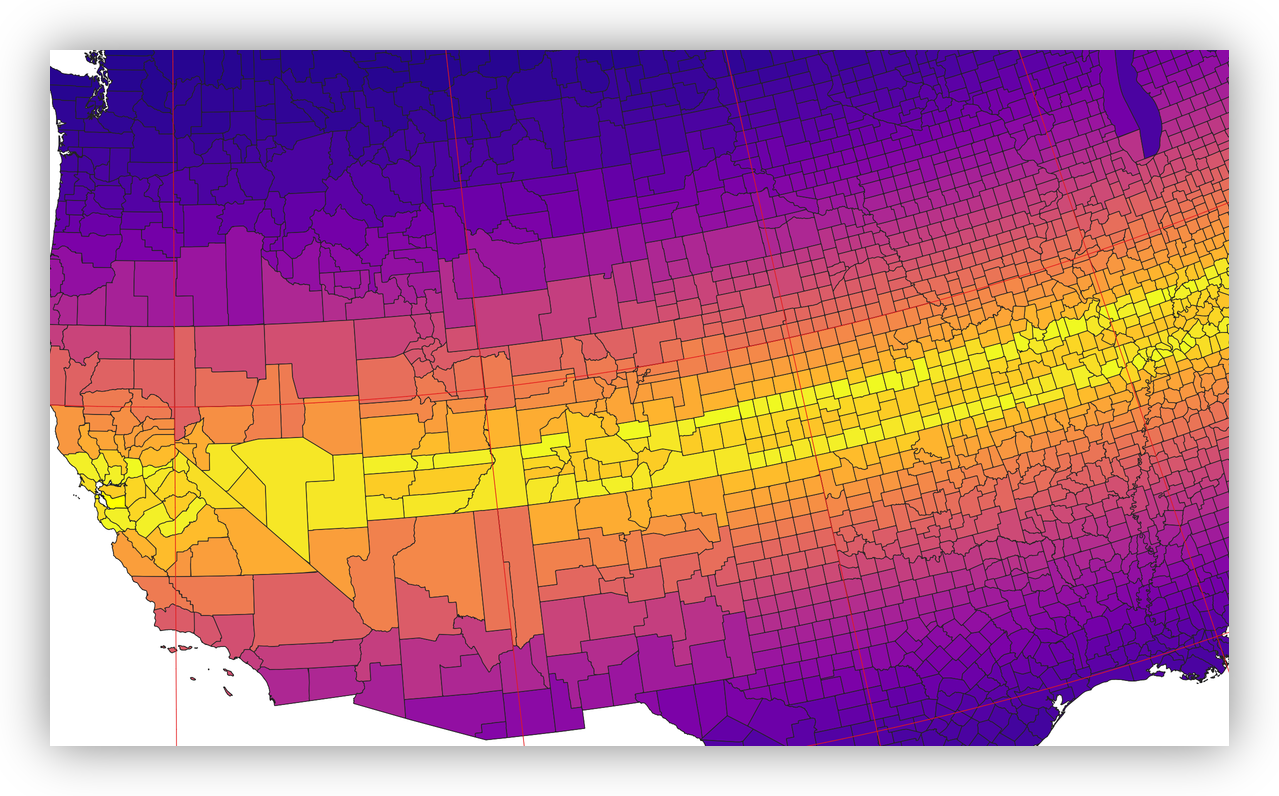
You should see a strong spatial pattern in the error values.
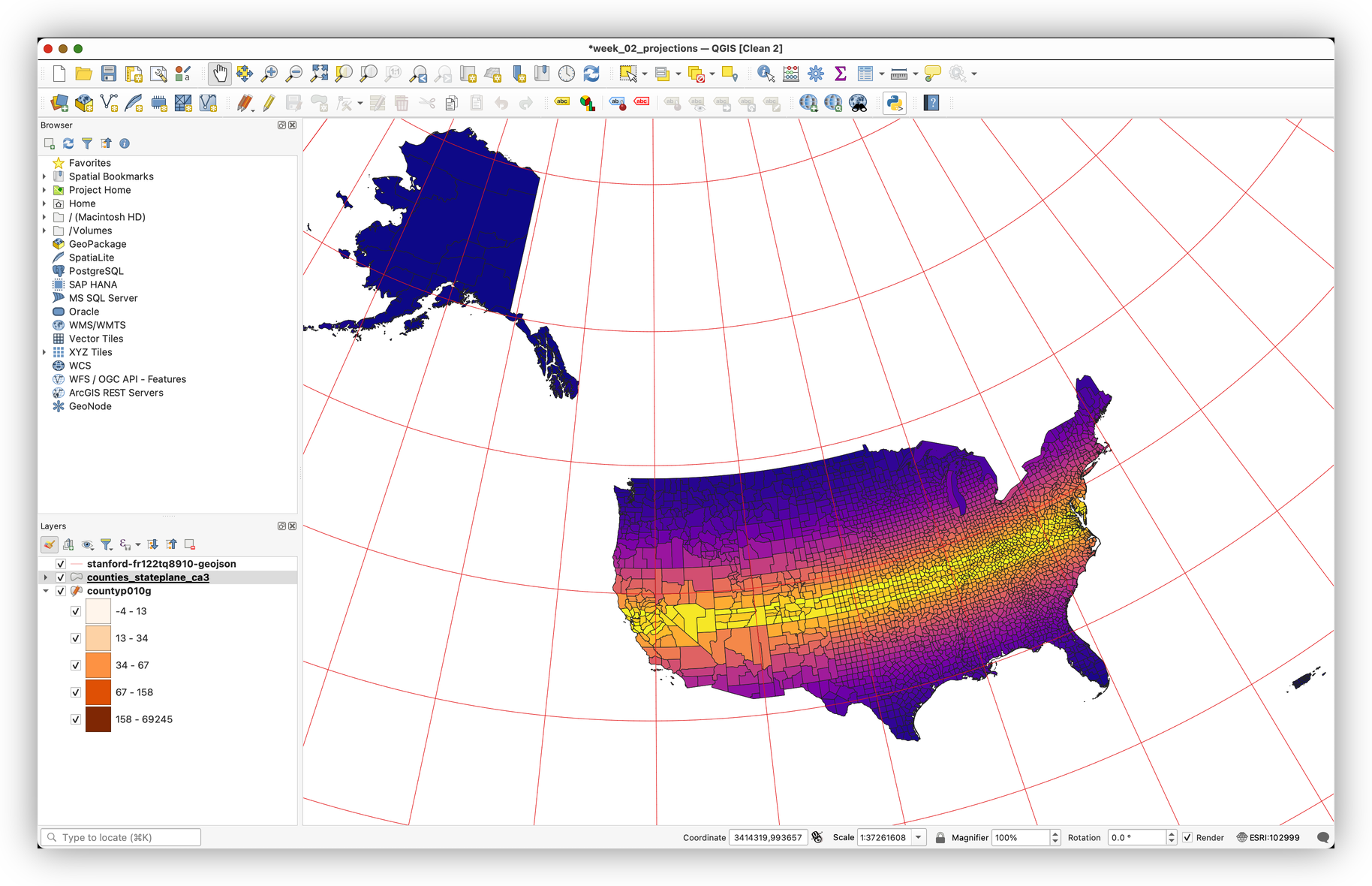
Zoom into the central United States and study where error is smallest and where it increases.
For Reflection
- Where do you think the lines of true scale for
NAD_1983_2011_StatePlane_California_III_FIPS_0403are located? - How does the mapped error pattern help you infer those locations?
- Why is a California State Plane CRS a poor choice for measuring the entire United States, even though it is a carefully designed projected system?
Use the Identify Features tool  on the graticule layer to inspect latitude values if that helps.
What to Turn In
- Create a QGIS layout with appropriate cartographic elements, including title, legend, scale bar, your name, date, and map CRS.
- Make design choices that clearly communicate the pattern of projection error.
- Export the layout as PDF or PNG and submit it to Canvas.
What This Lab Demonstrates
By the end of the workflow, you should be able to connect the conceptual vocabulary to a concrete GIS result:
- The ellipsoid matters because geodetic area is calculated on it.
- The project CRS matters because planar area depends on the projected coordinate plane.
- On-the-fly reprojection affects display, but not the stored geometry of a layer.
- Projection choice affects measurement quality.
- Lines of true scale are not just theoretical. They leave a visible signature in your error surface.
That is the central lesson of the lab, and it is exactly why projection choice is never just a cartographic afterthought.